Watering your pothos plant might seem straightforward, but doing it correctly is key to keeping your plant healthy, vibrant, and thriving.
If you’ve been watering your pothos on a strict schedule, it’s time to rethink that approach!
In this short guide, I’ll walk you through how to water pothos plant properly, based on soil moisture rather than arbitrary timing. This method ensures your pothos gets exactly what it needs, never too much, never too little.
Whether you’re a beginner or looking to refresh your plant care skills, following these steps will help you avoid common watering mistakes like root rot and underwatering.
Step 1: 🌱 Test The Soil Before Watering
The first and most important step in learning how to water pothos plant properly is to check the moisture level of the soil before you add any water.
Many people fall into the trap of watering their plants on a rigid schedule, such as every three or five days, but this can lead to overwatering or underwatering.
Instead, always test your pothos soil first. You can do this in two ways:
- Use your finger: Simply stick your finger deep into the soil, and aim for as far down as you can reach. Check several spots around the pot to get a good sense of the moisture level. If the soil feels dry at the lower levels, then your plant is ready for watering.
- Use a soil moisture meter: This is my preferred tool because it gives a more precise reading. Insert the meter probe into the soil at a lower level, being careful not to hit the bottom of the pot. Test in multiple areas to get an accurate reading.

Checking soil moisture rather than following a schedule ensures you only water when your pothos actually needs it, preventing problems like root rot caused by excess water.
Step 2: 💧 Pour Water Slowly And Carefully
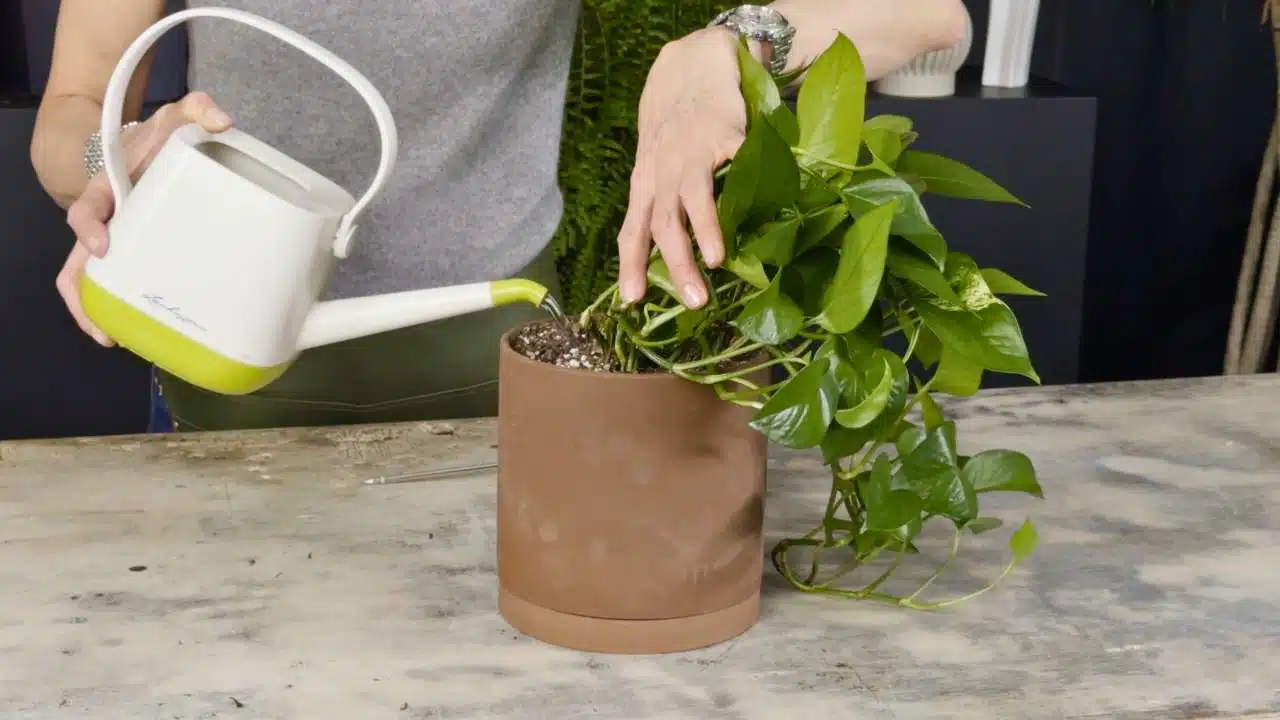
Once you’ve confirmed your pothos soil is dry and ready for watering, it’s time to hydrate your plant, but don’t rush!
Pour water slowly and gently around the base of the plant, making sure to water between the stems. This targeted watering helps ensure the water reaches the root zone effectively.
Start with a small amount of water. After watering, check the soil moisture again using your finger or moisture meter. This helps you gauge if your pothos has received enough water or if you need to add a bit more.
If the soil still feels dry or the moisture meter reading hasn’t shifted into the wet zone, add a little more water and check again. Repeat this process until the soil feels moist but not soggy.
Step 3: 🚫 Avoid Overwatering And Standing Water

One of the most common mistakes when learning how to water pothos plant is letting it sit in standing water. Excess water in the saucer beneath your pot can cause root rot and other fungal issues, which can seriously harm your plant.
After watering, always check the saucer for any accumulated water. If water has collected there, be sure to remove it immediately. Simply pour it out and place your plant back in its spot. This simple habit can save your pothos from many problems.
Remember, pothos plants prefer their soil to dry out slightly between waterings. Consistently soggy soil is a recipe for disaster, so be vigilant about drainage and water removal.
Step 4: 🔍 Monitor Your Pothos And Adjust Watering As Needed
Every environment is different, humidity, temperature, light levels, and pot size all affect how often your pothos needs water. This means that the best watering routine is the one tailored to your specific conditions.
Keep an eye on your pothos plant’s leaves and overall health. If you notice yellowing leaves or wilting, it might be a sign of overwatering or underwatering. For more information on troubleshooting leaf problems, check out our detailed guide on why leaves turn yellow or brown.
Adjust your watering frequency based on these observations and soil moisture checks. Using a soil moisture meter can be especially helpful if you’re unsure, as it removes the guesswork.
Step 5: 🛠️ Use the Right Tools For Consistent Care
While your finger is a great tool for testing soil moisture, a soil moisture meter offers precision and convenience.
I highly recommend investing in one, especially if you have multiple houseplants or are just starting out. You can find a reliable soil moisture meter here.
Using the right tools helps you develop a consistent watering routine tailored to your pothos’ needs and will improve your confidence as a plant parent.
Additional Tips For Healthy Pothos Care 🌿
- Light: Pothos thrive in bright, indirect light but can also tolerate low light. Avoid direct sunlight that can scorch the leaves.
- Humidity: Average indoor humidity is fine, but if your home is very dry, consider using a humidifier or misting occasionally.
- Fertilization: Feed your pothos with a balanced, water-soluble fertilizer every 4-6 weeks during the growing season.
- Repotting: Repot your pothos every 1-2 years to refresh soil and allow root growth. Check out our guide on repotting overgrown pothos for step-by-step instructions.
Frequently Asked Questions ❓
How often should I water my pothos plant?
Instead of watering on a fixed schedule, always check the soil moisture first. Water your pothos only when the soil feels dry 1-3 inches below the surface or when a moisture meter indicates dryness (reading between 1 and 3).
Can I use tap water for my pothos?
Yes, tap water is generally fine for pothos plants. However, if your tap water is heavily chlorinated or hard, consider letting it sit out overnight to allow chlorine to evaporate before watering.
What happens if I overwater my pothos?
Overwatering can cause root rot and yellowing leaves. Always ensure your pot has good drainage and never let your plant sit in standing water. Remove excess water from the saucer after watering.
Is it better to underwater or overwater pothos?
It’s better to underwater slightly than overwater. Pothos plants can tolerate occasional dryness better than consistently soggy soil, which can lead to root rot.
Can I water my pothos from the top only?
Yes, watering from the top around the base and between stems is best. Avoid watering the leaves directly to prevent fungal diseases.
Explore More Plant Care Guides from My City Plants 🌱
If you want to deepen your knowledge and keep all your plants thriving, here are some related guides you might find helpful:
- How to Use Soil Moisture Meter – Learn to avoid over and underwatering with this essential tool.
- How to Save an Overwatered Plant – Rescue your plants from watering mistakes.
- Why Leaves Turn Yellow or Brown – Diagnose leaf problems and keep your plants healthy.
- Repotting Overgrown Pothos – Step-by-step guide to giving your pothos more room to grow.
By mastering how to water pothos plant correctly, you’re well on your way to enjoying a lush, thriving plant that adds a touch of green beauty to your space. Remember, the key is to check the soil moisture first, water slowly and carefully, and never let your plant sit in standing water.